Learning geography can be an exciting and engaging experience for toddlers, especially when introduced through hands-on activities and creative exploration. At young ages, children learn most effectively through play, movement, and sensory interaction, which makes geography a wonderful subject for curiosity-driven learning. Rather than memorizing names and locations, toddlers can be encouraged to explore maps, landscapes, and cultural features in ways that feel like discovery. In Montessori education, this approach is especially valued, as lessons are designed to be child-led, tactile, and rooted in real-world experience. By incorporating physical materials, themed activities, nature exploration, and storytelling, parents and teachers can make U.S. geography both meaningful and enjoyable for early learners.
Hands On Approach
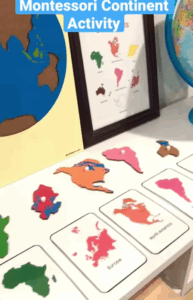 One of the most effective Montessori methods for teaching toddlers geography is the use of puzzle maps and globes. These materials allow children to physically remove and replace states, countries, or continents, transforming abstract shapes into something they can touch and manipulate. When a child picks up a puzzle piece shaped like California or Arizona, they begin to associate physical form with geographic location, creating early spatial awareness. Teachers may also use sandpaper maps, where children trace the textured outlines of the states with their fingers, reinforcing placement and geography through sensory input. Over time, toddlers build familiarity with map shapes and regions naturally, without pressure or formal memorization.
Storytelling Helps To Captivate
 Incorporating storytelling is another way to make geography come alive. Children love stories, and connecting places on the map with real human or natural features gives meaning to the shapes they see. For example, when teaching about the state of California, introducing the story of the Long Valley Caldera—a massive volcanic crater formed over 700,000 years ago—can spark fascination. Teachers can explain in simple terms that this giant natural wonder sits in eastern California and helps scientists learn about the Earth. By linking locations to exciting phenomena like mountains, rivers, deserts, wildlife, and geological history, toddlers gain curiosity and emotional connection to geography. Stories about national parks, animals, indigenous cultures, and landmarks can be woven into lessons, helping children understand that maps represent real places worth discovering.
Real World Examples & Exploration
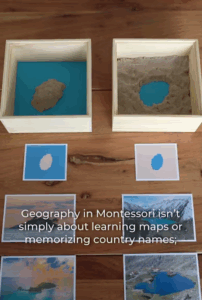 Montessori classrooms often emphasize project-based learning, which can make geography feel like exploration. Teachers may set up themed workstations such as “Southwest Desert,” “Pacific Coast,” or “Great Lakes,” where children handle objects connected to those areas—smooth river stones, seashells, photographs, small animal figures, or replicas of natural features. Art is another powerful tool; toddlers can paint maps, build landforms from clay, or craft collages of different states using natural colors and textures. Even cooking can become a geography lesson when children help prepare simple snacks inspired by different U.S. regions. The more senses engaged, the deeper the learning experience.
Outdoor exploration deepens the connection between geography and real life. Even if a child cannot visit the Long Valley Caldera or the Grand Canyon, they can take nature walks to observe landforms, hills, streams, and soil differences. Montessori educators often encourage field trips, park visits, and environmental activities to help children understand how geography shapes the world around them. Ultimately, making geography fun for toddlers comes down to inviting curiosity—letting them touch, explore, ask questions, and make discoveries at their own pace. Through hands-on Montessori approaches, young learners can become excited and engaged in understanding the geography of the United States while building a lifelong love for learning.